Citizens Energy Group has proposed a booster station and two 1.5-million-gallon storage tanks in Hendricks…
Is Meta Really Investing $10 Billion in Lebanon? Here’s What the Numbers Mean
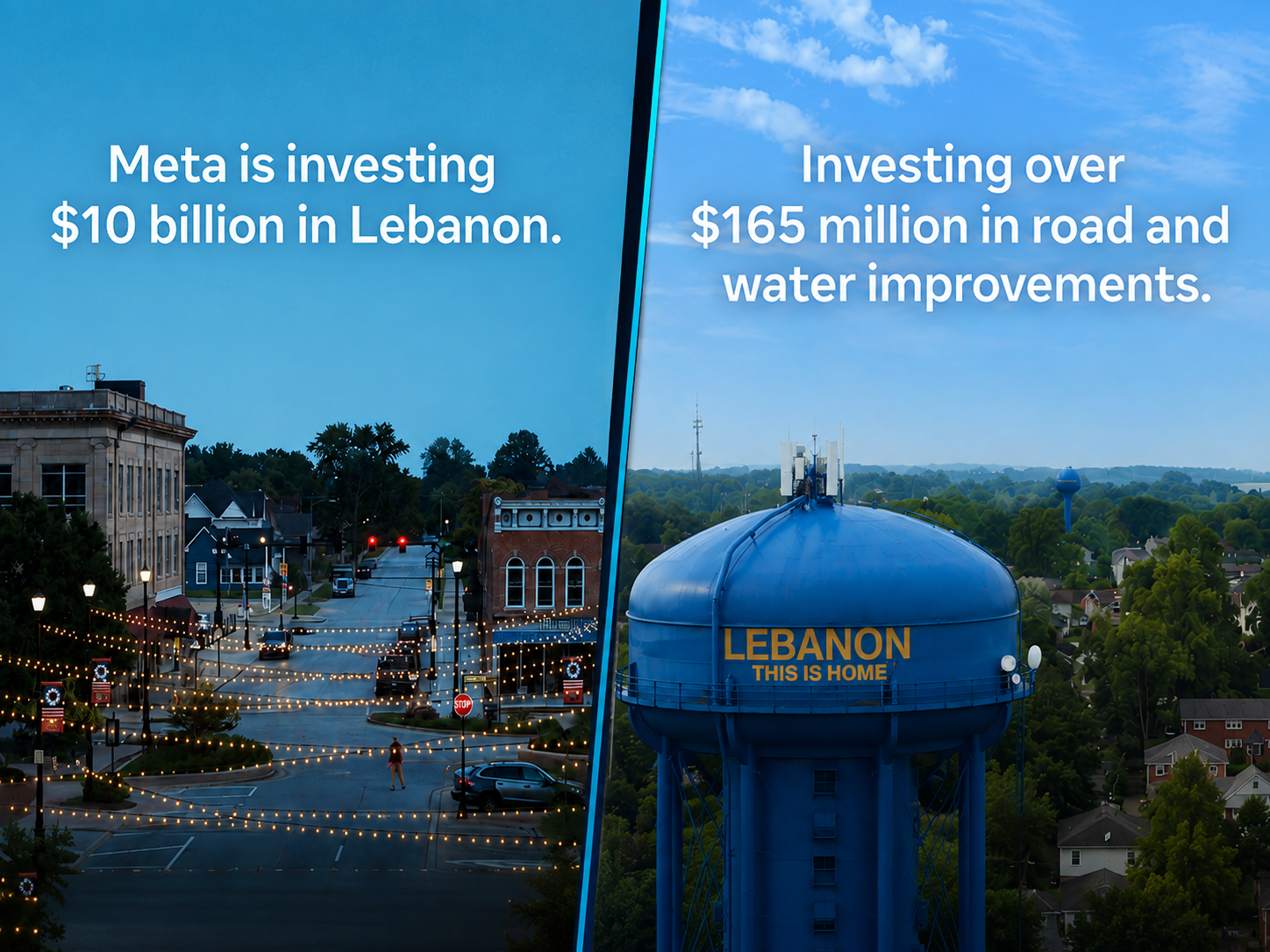
If you have been on Facebook recently, you may have seen two very different advertisements from Meta about its new data-center campus in Lebanon.
One said:
“Meta is investing $10 billion in Lebanon.”
A newer version says:
“Investing over $165 million in road and water improvements.”
Both numbers relate to Meta’s project at the LEAP Innovation District – but they do not describe the same kind of investment. Here is what residents should know about where the money is actually going.
The short answer
Meta’s announced investment of more than $10 billion is primarily the projected cost of building and equipping its own data-center campus.
That does not mean Meta is giving $10 billion to the City of Lebanon or spending $10 billion on local roads, parks, schools and public services.
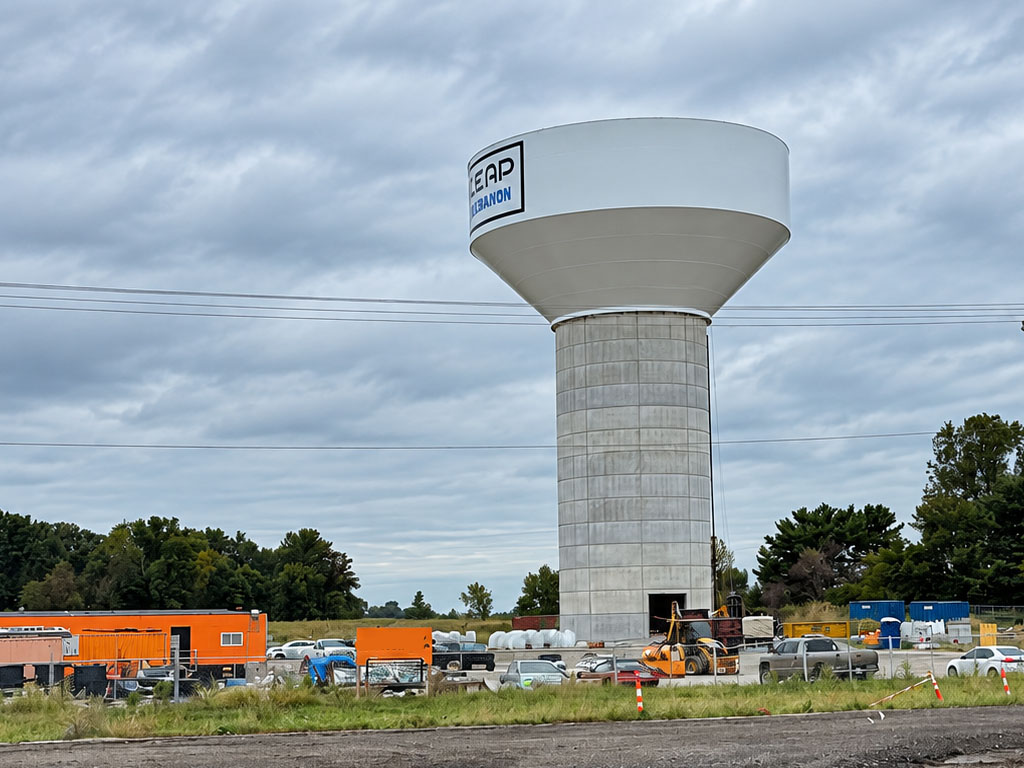
The considerably smaller infrastructure figure represents money connected to public road, water and utility improvements associated with the project. Those improvements may benefit Lebanon beyond the boundaries of Meta’s property, but many are also necessary for a data-center campus of this size to operate.
Both are investments located in Lebanon. They are not both investments in the community in the way most residents would interpret that phrase.
What does the $10 billion include?
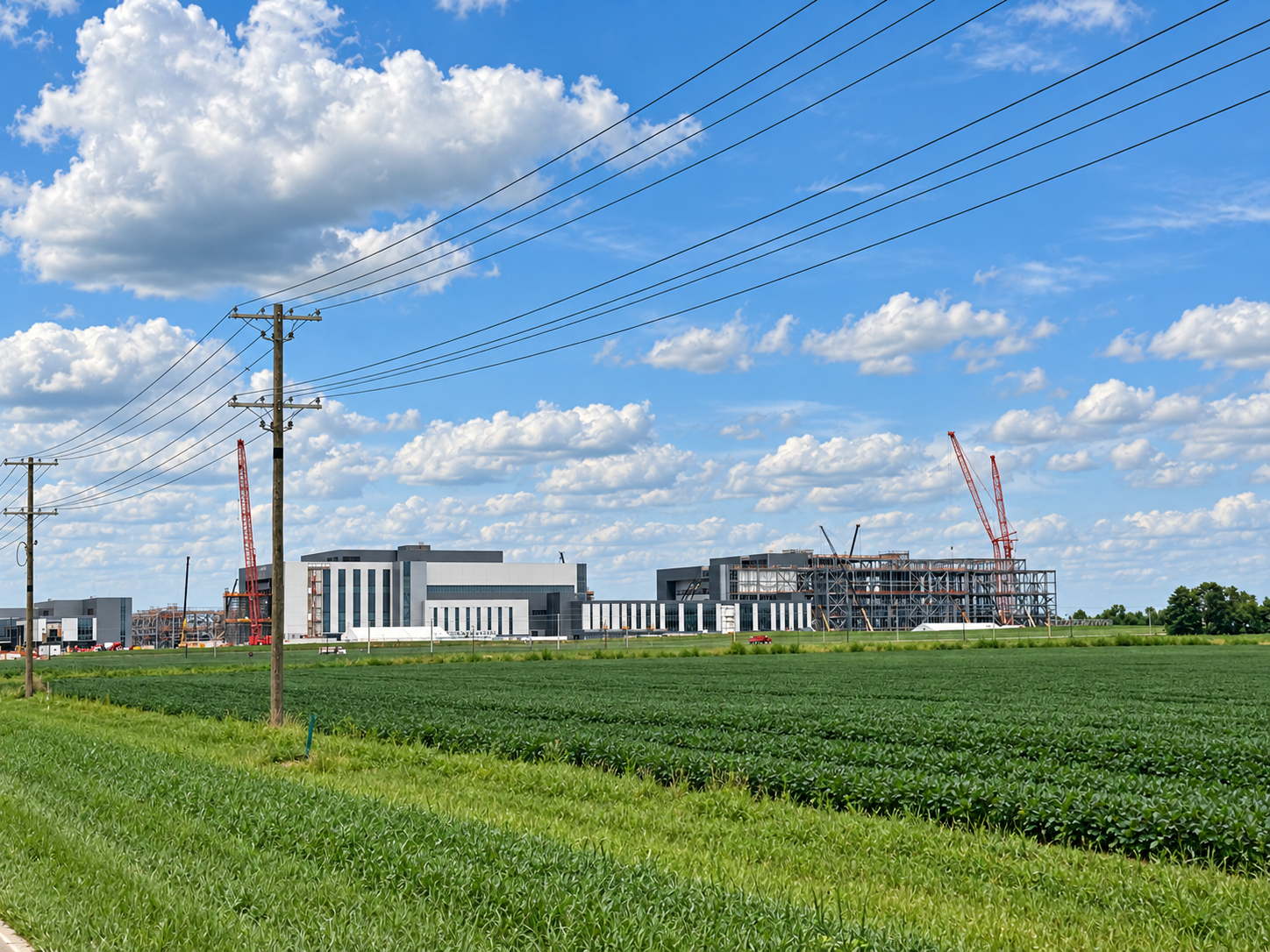
Meta broke ground in February 2026 on a planned 1,500-acre campus at the LEAP Innovation District. The completed development is expected to include approximately 4 million square feet across 13 buildings, including 10 data-center buildings and additional logistics, network and administrative facilities.
Meta says the campus will be capable of delivering one gigawatt of computing capacity and will support the company’s artificial-intelligence systems and other products.
The announced $10 billion is expected to be spent over multiple phases on items such as:
- Data-center buildings
- Servers and computing equipment
- Electrical and cooling systems
- Network infrastructure
- Warehouses and support buildings
- Construction labor and materials
- On-site infrastructure necessary to operate the campus
In other words, most of the $10 billion is a capital investment in Meta’s privately owned business operation. The facilities happen to be located in Lebanon, but the bulk of the money is not a contribution to Lebanon’s municipal budget or a community-improvement fund.
That distinction does not make the investment meaningless. Construction spending creates temporary jobs and business for contractors and suppliers, while the completed property can generate tax revenue and other economic activity. But saying Meta is “investing $10 billion in Lebanon” without explaining where that money goes understandably gives some residents the impression that the city itself is receiving far more than it actually is.
Meta expects the project to support more than 4,000 workers at peak construction and approximately 300 permanent operational jobs once the full campus is completed.
Where does the $165 million figure come from?
The newer advertisement says Meta is investing more than $165 million in road and water improvements, but the advertisement does not provide an itemized breakdown.
Earlier public statements from Meta officials identified:
- Approximately $45 million for public road improvements
- More than $75 million for public water-infrastructure projects
Those two publicly itemized amounts total more than $120 million – not $165 million. Meta’s corporate announcement separately says it will invest more than $120 million toward critical water infrastructure “as well as” roads, transmission lines and other utility improvements, but that language does not clearly explain how the newer $165 million total was calculated.
The $165 million claim may reflect an updated or expanded commitment, potentially combining approximately $45 million in road work with more than $120 million in water-related improvements. However, Meta has not published a detailed project list or cost table that clearly reconciles the newer advertisement with its earlier announcements.
Until that breakdown is made public, the safest conclusion is that Meta is claiming more than $165 million in combined road and water investment, but residents have not yet been shown exactly which projects are included, whether any costs overlap or how much of the work primarily serves the data-center campus.
Is Meta paying anything directly to Lebanon?
Yes. Separate from construction and infrastructure spending, Meta has committed to an annual community-impact payment of $1.5 million to the City of Lebanon for each completed phase of the project.
The campus may eventually include as many as six phases. If all six are completed under the announced terms, the payments could eventually reach $9 million per year. The money is intended to support quality-of-life and placemaking projects, although future city decisions will determine exactly how it is used.
Meta has also announced:
- $1 million annually for 20 years for the Boone REMC Community Fund to help qualifying families with energy costs
- Emergency water-bill assistance through The Caring Center
- Workforce-development support through the Boone County Career Collaborative
- A Community Action Grants program for schools and nonprofit organizations
- Water-restoration and environmental projects
These commitments are more directly connected to community benefits than the company’s overall $10 billion capital-investment figure, although some grant amounts have not yet been publicly specified.
What tax incentives is Meta receiving?
The public benefits also need to be considered alongside the incentives offered to secure the development.
Lebanon approved a package that includes a 10-year, 50% real-property tax abatement and a complete personal-property tax abatement covering Meta’s equipment for 35 years. Indiana also approved a state sales-tax exemption beginning with a 35-year term. Depending on the amount and timing of Meta’s investment, the state exemption may be extended to as long as 50 years.
The incentives are described as performance-based, meaning Meta must make the qualifying investments and create the required jobs before claiming the corresponding state benefits.
Meta will still pay some property taxes and make its separate community-impact payments. However, the company will not pay the full amount of taxes that would ordinarily apply to a $10 billion project without the approved incentives.
That is another reason the $10 billion headline should not be confused with $10 billion in public financial benefit.
What is the fairest way to describe the project?
A more precise description would be:
Meta plans to spend more than $10 billion building and equipping a privately owned data-center campus in Lebanon. In addition, the company says it will fund more than $165 million in road and water improvements, make annual community-impact payments tied to completed phases and support several local assistance and grant programs. The project is also receiving substantial local and state tax incentives.
That wording recognizes the scale of the project without suggesting that Lebanon has received a $10 billion check.
The bottom line
The original advertisement was not necessarily false – but it left out the distinction that matters most.
Meta’s $10 billion is overwhelmingly an investment in Meta’s own data-center infrastructure. It may bring construction activity, permanent jobs, tax revenue and indirect economic benefits to Lebanon, but it is not $10 billion available for community improvements.
The newer $165 million figure is more relevant to the public conversation because it focuses on roads and water infrastructure. However, Meta should publish a clear breakdown showing how that number was calculated, which projects it covers and how those projects will benefit the broader community.
Lebanon is receiving a major private development, associated infrastructure improvements and several direct community commitments. Residents can recognize those benefits while still asking for accurate language, complete numbers and greater transparency about the public costs and incentives attached to the project.
Related Posts

Comments (0)