State funding will support planning and design for a facility intended to help train workers…
Powering Indiana’s Data Centers: Amazon’s Nuclear Proposal and the Infrastructure Taking Shape Around LEAP
Amazon’s newly announced nuclear energy proposal in Sullivan County highlights a question already facing Boone County: where will the electricity for Indiana’s expanding data center industry come from, and what will it take to deliver it?
For residents around Lebanon and the LEAP Innovation District, the discussion reaches beyond power plants. It includes new transmission lines, property easements, infrastructure costs and the potential use of eminent domain.
Amazon’s proposal and Meta’s Lebanon development are separate projects. Together, however, they illustrate the scale of energy planning accompanying Indiana’s technology investments.
Amazon backs a proposed 960-megawatt nuclear project
On October 19, Amazon, American Electric Power and X-energy announced an agreement to explore building 12 small modular nuclear reactors at the former Breed Generating Station site in Sullivan County.
The proposed facility would add up to 960 megawatts of carbon-free generating capacity, serving both Amazon’s data centers and the regional electricity grid. Amazon would provide development funding and become the first customer to purchase electricity from the plant.
The announcement advances feasibility work rather than approving construction. No project cost, construction date or operating date was disclosed. Financing, regulatory approvals and site suitability remain among the conditions that could determine whether the project proceeds.
The proposal represents a potential future electricity source. Its contribution to Indiana’s power supply will depend on whether—and when—it becomes operational.
What is planned for Meta’s electricity supply?
In Lebanon, Meta has worked with Boone Power and Wabash Valley Power Alliance to arrange electricity for its data center campus.
Boone Power describes the arrangement as a “bring your own energy” agreement. According to the cooperative, Meta is investing in a carbon-free generation source to meet the campus’s expected electricity demand. The public explanation does not identify that source by name.
Meta also says it matches all its electricity use with clean and renewable energy. Its Lebanon information sheet identifies four Indiana projects adding a combined 409 megawatts of clean and renewable generating capacity.
Those statements describe energy commitments, but they do not provide a complete public account of which resources will meet the campus’s needs throughout the day and year.
Boone Power explains that electricity flows through an interconnected grid, rather than exclusively from one power plant to one customer. Adding generation increases the overall electricity supply available to that system.
For residents, the outstanding questions include the identity and operating schedule of Meta’s supporting generation, how clean-energy production will align with demand, and what supplies electricity when those resources are unavailable.
New power lines are part of the LEAP expansion
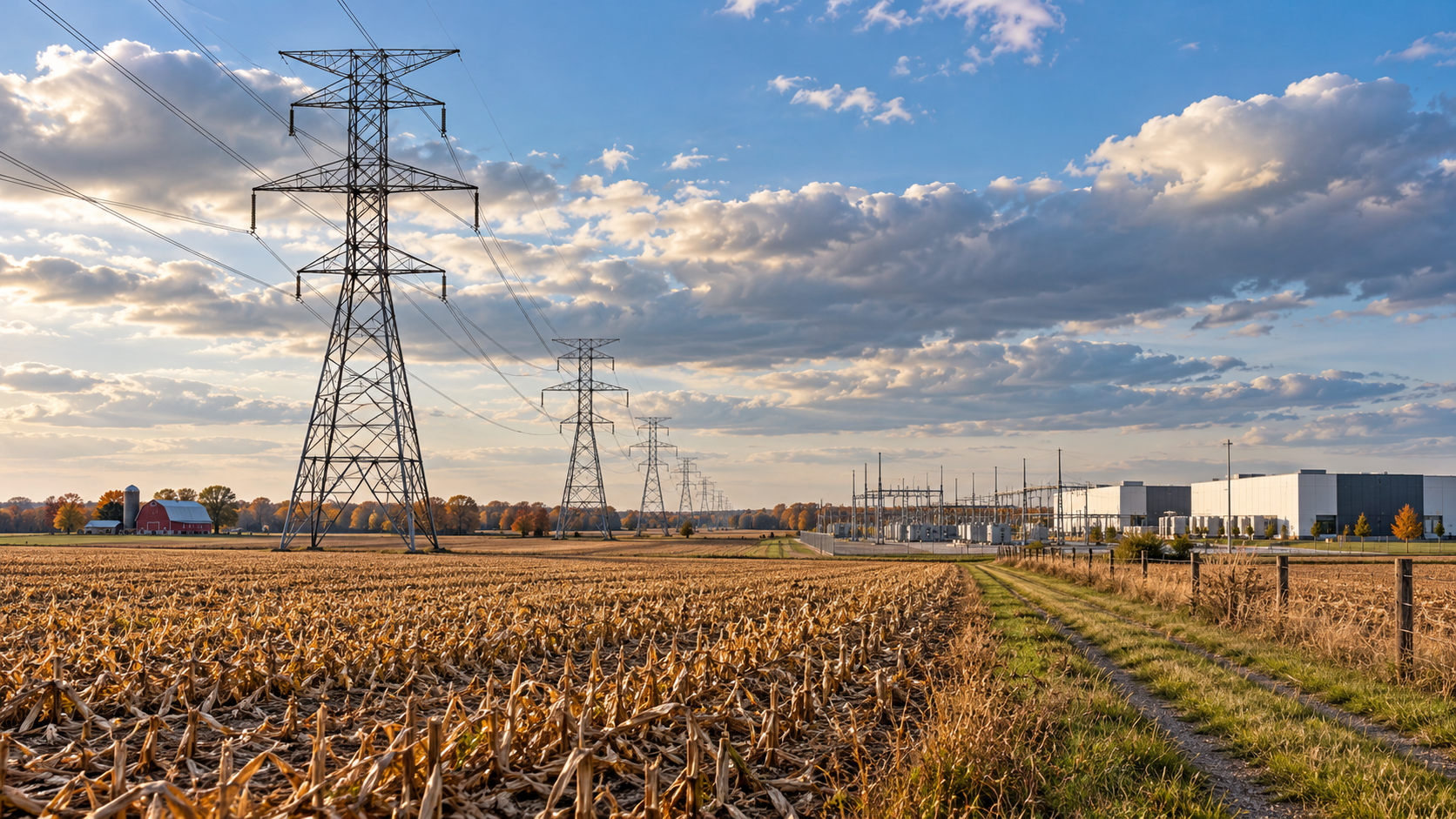
Generating electricity is only part of the work. Delivering it requires transmission capacity, substations and connections to the broader grid.
As we reported in “New Power Lines for LEAP: What It Means for Boone County,” Indiana utility regulators approved an ownership arrangement on September 30 for three transmission projects under development.
Two will support growing electricity demand associated with Lilly’s manufacturing complex and Meta’s data center in the LEAP area. The third will connect the natural gas-fired St. Joseph Energy Center in northern Indiana to the MISO electricity grid; it currently connects to PJM.
The projects are being developed through Wabash Valley Transmission Company. The regulatory order describes the company’s role as constructing, owning and operating transmission infrastructure, with functional control transferred to MISO.
These transmission projects do not establish that Amazon’s proposed nuclear plant will supply Meta’s Lebanon campus. They are separate developments within Indiana’s broader electricity expansion.
What eminent-domain authority means for landowners
The September decision also gives Wabash Valley Transmission Company authority to use eminent domain to pursue property rights needed for its transmission infrastructure. That authority belongs to the transmission company, rather than Meta or Lilly.
As outlined in our earlier coverage, the approval does not automatically transfer property. If voluntary negotiations fail, the company can pursue a court process to acquire necessary rights, including easements allowing power lines to cross private land. Landowners retain legal protections, including the ability to raise objections and receive just compensation.
That makes the location of transmission routes significant for people who may live well outside the development campuses. The infrastructure supporting LEAP can affect properties beyond the district itself.
Who pays for the infrastructure?
Meta says it has worked with its utility partners to pay the full costs of the energy used by its data centers so consumers are not negatively affected.
Boone Power distinguishes between facilities used solely by Meta and infrastructure serving the wider network. It says customer-specific infrastructure, such as substations used only by the campus, is paid for by that customer. Network transmission infrastructure receives revenue through transmission charges paid by utilities using the system.
For residents, that distinction makes clear explanations of cost allocation and financial protections an important part of following these projects.
What Boone County should watch next
The most useful next steps are concrete disclosures: the generation resources supporting Meta’s agreement, when they will become available, the routes of new transmission lines and the properties those routes could affect.
Residents should also watch construction schedules, easement negotiations, any eminent-domain proceedings and explanations of how infrastructure costs will be recovered.
Amazon’s nuclear proposal shows one possible direction for Indiana’s future electricity supply. Around LEAP, decisions about delivering power—and securing the land rights to do so—are already moving forward. Both deserve continued public attention as the state’s major developments take shape.
Related Posts


Comments (0)